
The Stalag Luft III Museum in Żagań, Poland, offers visitors a thoughtful insight into the former prisoner-of-war camp, with exhibits, reconstructions, and memorials that carefully present the history of Allied airmen held there during the Second World War.
Poland: Greater Poland – Poznań
About Poznań
Poznań, one of Poland’s oldest and most historically significant cities, stands proudly on the banks of the River Warta in western Poland. It was here, in the 10th century, that the Polish state began to take shape under the first rulers of the Piast dynasty. The city’s origins are closely linked to the beginnings of Christianity in Poland, as Poznań Cathedral on Ostrów Tumski – Cathedral Island – is widely believed to be the burial place of the country’s earliest monarchs. Over the centuries, Poznań developed into a major centre of trade, learning and culture, its fortunes rising and falling with the tides of history. The red-brick churches, Renaissance townhouses, and cobbled lanes of its old town still speak of this layered past. Despite suffering heavy damage during the Second World War, the city rebuilt with great care, preserving its medieval heart while embracing a modern and forward-looking spirit.
The heart of Poznań is its Old Market Square, one of the most beautiful in Poland. At its centre stands the splendid Renaissance Town Hall, whose elegant façade and ornate clock tower dominate the square. Each day at noon, crowds gather to watch the city’s famous mechanical goats emerge from the clock tower to butt heads – a quirky symbol loved by locals and visitors alike. Around the square, pastel-coloured merchant houses line the cobblestones, their arcades now home to cafés, shops, and small museums. The nearby Royal Castle, rebuilt after wartime destruction, recalls the city’s royal connections, while St. Stanislaus’ Church dazzles with its richly decorated Baroque interior. Beyond the Old Town, Poznań’s modern side reveals itself in lively neighbourhoods filled with street art, creative studios, and independent cafés. The Jeżyce district, for example, has become a hub of youthful energy and culture, blending old architecture with contemporary style.
Poznań is a city that balances its deep history with an unmistakably youthful and dynamic character. Home to one of Poland’s oldest universities, it buzzes with student life, festivals, and cultural events throughout the year. The Malta Festival, held every summer around the picturesque Lake Malta, fills the city with theatre, music, and outdoor performances. Nature lovers can find peace in the city’s many parks and gardens – Citadel Park, the largest, doubles as a place of reflection, with military monuments and museums set among rolling green lawns. No visit is complete without tasting a rogal świętomarciński, the city’s signature sweet pastry, filled with white poppy seeds and almonds – a treat traditionally enjoyed on St. Martin’s Day but now available year-round. Blending tradition with innovation, Poznań offers a glimpse of Poland both ancient and modern, making it a city that rewards slow exploration and leaves a lasting impression.

Our afternoon visit to Poznań
🏙️ Old Market Square & Town Hall Goats
We began our afternoon in the heart of the city — Stary Rynek (Old Market Square) — a vivid, living postcard of Poznań’s past and present. Colourful merchant houses line the square, their façades restored after wartime destruction, and cafés spill cobbled-street ambience into the open. The square pulses with life: locals sipping coffee, street performers, and the gentle bustle of a European market district. As you stroll, take in details like the four mythological fountains (Mars, Proserpina, Neptune, Apollo) and the medieval pillory, all juxtaposed against the elegant Renaissance and mannerist buildings that tell of centuries of rebuilding and reinvention.
But the real draw here is the goat clock on the Town Hall. At noon (and sometimes 3 pm), two mechanical goats emerge from a small door above the clock and butt heads to the stirring sound of a bugle call — a quirky spectacle beloved by locals and travellers alike. The goats are a symbol of Poznań, and this ritual has become an iconic moment in the city’s daily life. As the goats perform, the square fills with laughter, cameras click, and the story of the city’s legend is brought to life in miniature form.


🥐 Croissant Museum (Rogalowe Muzeum)
From the Town Hall, we took the short walk to the Croissant Museum (Rogalowe Muzeum Poznania) — a small but delightful interactive experience centred on Poznań’s famous St. Martin’s croissants. Inside, we watched a show that explained the legend, history, and baking tradition behind the pastry. You’ll see how the dough is formed, glazed, and baked; at the end, we received our very own croissant to taste — warm, nutty, subtly sweet, and full of local flavour.
This stop was more than a culinary detour — it was a cultural one. The museum links the pastry to Poznań’s identity, dialect, and local legend, showing how a humble baked good becomes a city’s emblem. It also gives a pleasant pause in the walking portion of your afternoon, allowing you to rest, enjoy something edible, and let your senses connect with local heritage.

⛪ Ostrów Tumski & Cathedral (Sts Peter & Paul)
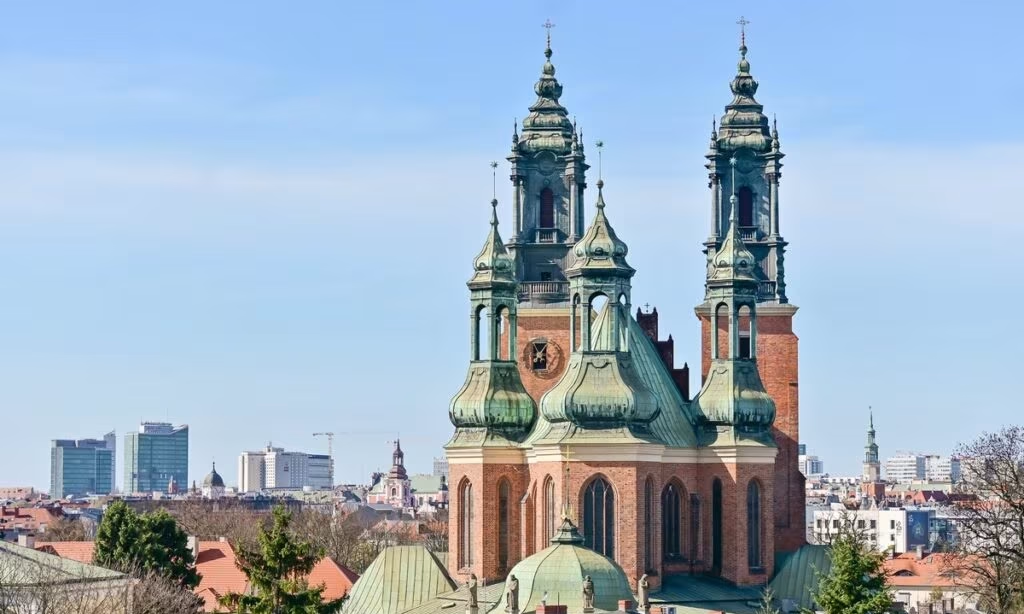
From the bustling square and its sweet interlude, we made our way to Ostrów Tumski (Cathedral Island) — often called the birthplace of Poland — where the Archcathedral Basilica of St. Peter and St. Paul stands as one of the oldest cathedrals in the land. Crossing over to this quieter, sacred island feels like stepping back in time. Inside the cathedral, we wandered amongst centuries old tombs, crypts, and architectural layers: Romanesque foundations, Gothic vaults, later reconstructions, and rich interior decorations.
The cathedral holds relics and is part of the narrative of Poland’s Christianisation and state formation. The quiet of the island, the view of the Warta riverbanks, and the hush within the stone walls make this a contemplative counterpoint to our time in the square.
🏰 Imperial Castle & Dzielnica Cesarska (Imperial Quarter)
After the serenity of Cathedral Island, we returned toward the city centre and headed northward into the Imperial Castle (Zamek Cesarski) and the surrounding Imperial Quarter (Dzielnica Cesarska). This early 20th-century castle was built for Emperor Wilhelm II and showcases sweeping vistas, formal gardens, and imposing architecture. Inside, the castle now functions as a cultural centre, housing performance spaces, galleries, and occasional exhibitions.
But the charm is not just inside — wandering the outer grounds, through green lawns, tree-lined paths, and landscaped terraces, you get a sense of the city’s imperial era and its layering of history. The Imperial Quarter was once home to residences, administrative buildings, and streets built to impress — today, these architectural reminders mingle with modern renovation, art spaces, cafés, and cultural institutions, offering a pleasant strolling route through urban heritage.

🖼️ Enigma Cypher Centre
Rounding off our afternoon, we visited the Enigma Cypher Centre, where we learnt about Polish cryptographers, the Enigma machine, and the role of secrecy, codebreaking, and
The Enigma Centre made for a lively finish to our afternoon exploration.


Getting to and around Poznań
🚆 Getting to Poznań
Poznań, one of Poland’s oldest and most dynamic cities, is exceptionally well connected by rail, road, and air. Travelling by train is often the easiest and most scenic option, with frequent services linking Poznań Główny (the main station) to Warsaw, Gdańsk, Wrocław, and Berlin. The modern station complex sits right beside the Avenida shopping centre, offering cafes and amenities for travellers. If you’re arriving by air, Poznań–Ławica Airport (POZ) lies just 7 kilometres west of the city centre and serves a good mix of domestic and international routes. Regular city buses (notably lines 159 and 148) run from the airport to the main railway station and city centre in about 20–25 minutes. For those driving, Poznań sits on the A2 motorway, the main route connecting Berlin with Warsaw, making it easy to reach by car from either direction.
🚌 Getting Around the City
Once in Poznań, getting around is simple thanks to an efficient and well-organised public transport system. The city’s network of trams and buses, operated by ZTM Poznań, covers every district and runs from early morning until around midnight, with night buses available on main routes. Tickets can be purchased at machines at most stops, on board with contactless payment, or via mobile apps. For short visits, a 24-hour or 48-hour ticket provides unlimited travel and good value. The trams are particularly convenient for sightseeing, as many lines pass through the old town and along key attractions such as Ostrów Tumski and Jeżyce.
🚴♀️ Walking and Cycling
Poznań is a delightfully walkable city, especially in the compact historic centre where most landmarks are within easy reach of one another. The cobbled streets around the Old Market Square (Stary Rynek) are best explored on foot, allowing time to admire the colourful façades and lively street cafés. For longer distances, cycling is a great option. The Poznań City Bike scheme and newer e-scooter services like Bolt and Tier provide affordable, eco-friendly ways to move about. Dedicated cycle paths and riverside routes along the Warta River make for pleasant and safe rides.
🚖 Taxis and Ride Apps
Taxis are widely available and reasonably priced, but it’s best to use registered companies or ride-hailing apps like Bolt, Free Now, or Uber to ensure fair fares. Many drivers speak at least basic English, and journeys within the city centre are usually quick and inexpensive.
The best time to visit Poznań
🌸 Spring (March – May)
Spring in Poznań brings a gentle awakening after the long Polish winter. From late March, temperatures begin to climb, and the city slowly fills with colour as flowers bloom in the parks around Lake Malta and Cytadela Park. Daytime temperatures range from 10°C to 20°C by May, making it pleasant for sightseeing without the summer crowds. The Easter period often features local markets and church processions, while May sees outdoor cafés reopening and the city coming alive. Occasional rain showers are common, but they don’t usually last long.
What to pack: Light jackets, long-sleeved tops, jeans or trousers, and a compact umbrella. A pair of comfortable walking shoes is essential for exploring the cobbled Old Town.
🌞 Summer (June – August)
Summer is the most popular time to visit Poznań, with warm days, lively festivals, and long hours of daylight. Average temperatures hover between 20°C and 27°C, and sometimes exceed 30°C in July. Outdoor life thrives — locals gather at the Old Market Square, riverside cafés buzz with activity, and cultural events such as the Malta Festival fill the city with energy. It’s the best time for open-air concerts, boat rides, and alfresco dining. However, accommodation prices can rise, and some days may feel humid.
What to pack: Lightweight clothes, sunglasses, sunscreen, and a hat. Bring a light rain jacket for the occasional summer storm.
🍂 Autumn (September – November)
Autumn in Poznań is a season of calm and colour. September often enjoys mild temperatures of around 18°C, perfect for sightseeing and outdoor walks. By October, the city’s parks are awash with golden leaves, and the tourist crowds begin to thin. Cultural life picks up again with theatre, music, and university events returning after the summer break. November can be chilly and grey, with temperatures dropping to around 5°C, but it’s an atmospheric time for museum visits and cosy cafés.
What to pack: Warm layers, a jumper, a medium-weight coat, and waterproof shoes for unpredictable weather.
❄️ Winter (December – February)
Winter in Poznań is cold and quiet, yet charming in its own way. Temperatures often fall below freezing, and snow occasionally blankets the city, giving the Old Town a fairy-tale look. The highlight of the season is the Christmas Market at Plac Wolności, where wooden stalls sell mulled wine, handmade gifts, and festive treats. January and February tend to be the coldest months, but if you don’t mind bundling up, you’ll find shorter queues at attractions and cheaper hotel rates.
What to pack: A thick winter coat, gloves, hat, scarf, thermal layers, and waterproof boots for icy pavements.
📊 Seasonal Summary Chart
| Season | Average Temperature | Best For | Crowds | Weather Notes |
|---|---|---|---|---|
| 🌸 Spring (Mar–May) | 10–20°C | Sightseeing, local festivals | Moderate | Mild with light rain |
| 🌞 Summer (Jun–Aug) | 20–27°C | Outdoor events, nightlife | High | Warm and sunny |
| 🍂 Autumn (Sep–Nov) | 5–18°C | Scenic walks, culture | Low to moderate | Cool, colourful foliage |
| ❄️ Winter (Dec–Feb) | -5–5°C | Christmas markets, quiet breaks | Low | Cold, chance of snow |
🌤 Overall Best Time to Visit
The best time to visit Poznań is late spring to early autumn (May to September). During these months, the weather is comfortably warm, outdoor life is at its best, and the city’s many festivals showcase its creative spirit. For those who prefer fewer tourists and lower prices, September is especially ideal — mild temperatures, golden scenery, and a relaxed local atmosphere make it one of the most rewarding times to experience Poznań.
Where to stay in Capeche
1. Luxury – Hotel Blow Up Hall 5050
The Hotel Blow Up Hall 5050 in Poznań is not just a place to stay – it’s an experience that blends art, technology, and luxury in a way few hotels in Europe attempt. Housed within the stylish Stary Browar complex, a redeveloped 19th-century brewery turned into a cultural and shopping centre, this boutique hotel was conceived by the Polish artist and entrepreneur Grażyna Kulczyk as a living art installation. Its very name references a 1960s art film, and the concept is built around the idea of perception and transformation. There is no traditional reception desk, no numbered rooms, and no keys. Instead, guests use iPhones to locate and access their rooms, adding an almost futuristic air of mystery. The interiors are a striking mix of minimalist design, dark tones, and polished surfaces, offset by experimental digital art and interactive installations that change depending on light and movement. Each of the individually designed rooms feels like a modern gallery space rather than a conventional hotel suite. The atmosphere is sophisticated but deliberately unconventional, appealing to travellers with a taste for innovation and creativity. Its location within Stary Browar means fine dining, high-end shops, and contemporary art galleries are just steps away, while the Old Market Square is a short stroll through Poznań’s charming streets. Blow Up Hall is as much a statement as it is a hotel — a bold fusion of art, architecture, and imagination that captures the forward-looking spirit of the city itself.


2. Mid-Range – Brovaria Boutique Hotel Stary Rynek
Set right on Poznań’s elegant Stary Rynek – the Old Market Square – the Brovaria Boutique Hotel combines historic charm with modern comfort in one of the city’s most atmospheric locations. The hotel occupies a beautifully restored townhouse, its façade blending perfectly with the colourful Renaissance-style buildings that frame the square. Inside, the décor strikes a balance between old-world elegance and contemporary design, with polished wooden floors, high ceilings, and soft lighting that creates a warm, welcoming feel. Many rooms overlook the bustling square below, offering front-row views of Poznań’s lively heart, where cafés spill out under parasols and the sound of street musicians drifts through the air. What makes Brovaria truly unique, however, is its in-house brewery and restaurant, where guests can sample craft beers brewed on-site and enjoy hearty Polish and European dishes in a stylish brasserie setting. It’s the perfect base for exploring Poznań’s Old Town – with the Town Hall, museums, and boutiques all just steps away – and an ideal retreat for those who appreciate local flavour, fine hospitality, and a touch of history at the centre of it all.

3. Budget – Hotel Traffic Poznań Stare Miasto
Hotel Traffic Poznań Stare Miasto is a bright, modern, and welcoming place to stay right in the heart of Poznań. Located just a short stroll from the city’s colourful Old Market Square, it offers an ideal base for exploring the historic centre, with its lively cafés, bars, and cobbled streets. The hotel has a clean, contemporary style, with comfortable rooms that range from cosy singles to larger family options, all equipped with practical amenities such as air conditioning, free Wi-Fi, and flat-screen TVs. The atmosphere is relaxed and friendly, appealing equally to budget travellers, couples, and business visitors. There’s a breakfast room serving a generous buffet each morning, plus a shared lounge where guests can unwind or plan their day. The staff are known for being helpful and efficient, always ready with maps, advice, and local recommendations. Just a few minutes’ walk from Poznań Główny railway station and close to the Stary Browar shopping centre, Hotel Traffic combines convenience, affordability, and comfort in one of the city’s most convenient locations.

Related
More to Explore
