
UNESCO has listed Ancient Thebes with its Necropolis as a World Heritage Site because it includes some of the most important temples, tombs, and monuments from ancient Egypt—such as the Karnak and Luxor temples, the Valley of the Kings, and the Valley of the Queens—showing the city's role as a major religious and political centre for many centuries and offering a unique insight into Egyptian beliefs, art, and history.
Egypt: Cairo – Discovering Islamic Cairo
Islamic Cairo isn’t just a collection of old buildings—it’s a city within a city, layered with a thousand years of life, trade, learning and religion. It’s noisy, sometimes chaotic, and full of character. Recognised by UNESCO as a World Heritage Site, this area isn’t a museum frozen in time, but a district where the past and present co-exist in the same streets. You’ll find vendors pushing carts, children running between medieval mosques, and the scent of bread and spices in the air. It’s one of those places where you’re as likely to trip over a centuries-old stone as you are to be nudged by a scooter.
The Citadel of Saladin and the Mosque of Muhammad Ali
The Citadel is a bit like Cairo’s crown, sitting up high on Mokattam Hill with a commanding view over the sprawling city. It was built in the 12th century by Saladin as a military stronghold, primarily to guard against Crusaders, though in the end it became more useful as a seat of power. Over time it grew into a fortified compound with walls, towers, and a string of palaces, all built and rebuilt by Egypt’s rulers over the centuries. Inside the Citadel, one of the standout features—both architecturally and symbolically—is the Mosque of Muhammad Ali. You can’t really miss it; its domes and twin minarets dominate the skyline and can be seen from all over the city. Built in the 19th century in Ottoman style, it’s more Turkish than Egyptian in design, clearly modelled after Istanbul’s great mosques. Step inside and you’re greeted with vast open space, a towering central dome, and a sense of deliberate grandeur. The alabaster cladding gives it its nickname, the Alabaster Mosque, and the interior—with its massive chandeliers and intricate decoration—is impressive without being overwhelming. The mosque was a statement by Muhammad Ali Pasha to assert his authority and legacy, and it still works. From the courtyard, the panoramic view of Cairo is as much the draw as the building itself—on a clear day, even the Giza Pyramids peek through the haze. Together, the Citadel and the mosque represent the military and religious power that once governed Egypt, and wandering the grounds offers a sense of how history layered itself here over the centuries.


Al-Muizz Street and Its Mosques
If the Citadel is the crown, Al-Muizz Street is the backbone of Islamic Cairo. It runs straight through the historic district and is lined with some of the best-preserved Islamic architecture anywhere in the world. Originally laid out in the Fatimid period, the street has been the heart of the city’s spiritual and commercial life since the 10th century. As you walk down it, you pass a string of mosques, madrasas, sabils (public fountains), and khanqahs (Sufi lodges), many with elaborate façades and towering minarets. The Qalawun complex is a highlight, built by a 13th-century Mamluk sultan. It’s an impressive three-in-one: mosque, madrasa, and mausoleum. Just down the way is the Mosque of Sultan Barquq, another fine example of Mamluk architecture, with its domed chamber and decorated ceilings. The whole street has been partly pedestrianised and cleaned up in recent years, which makes it a bit easier to take in, although you’ll still find local traders, kids, and the general din of Cairo life pressing in from all sides.

Khan el-Khalili Bazaar
A short walk from Al-Muizz Street brings you to Khan el-Khalili, a market that dates back to the 14th century. This isn’t your typical souk aimed only at tourists, though there’s plenty of that as well. You’ll find everything from brass lanterns and leather slippers to silver jewellery and dusty antiques. The lanes are narrow and sometimes confusing, and part of the fun is getting slightly lost. Tucked inside the bazaar is El-Fishawy, a historic café that’s been serving tea and shisha since 1773. You can sit there with a mint tea and just watch life happen around you. It’s loud, a bit chaotic, but full of energy. You get the sense people have been doing exactly the same thing in the same spot for hundreds of years.

Al-Azhar Mosque
Right beside the Khan lies Al-Azhar Mosque, one of the oldest mosques in Cairo, founded in 970 CE by the Fatimids. It’s also home to one of the oldest universities in the world. What’s striking about Al-Azhar is how it has grown and evolved over time—different dynasties have added their bits, resulting in a mix of architectural styles. But somehow it all works together. Step inside and it feels peaceful, especially in the inner courtyard where white marble reflects the sun. The prayer hall is vast and filled with rows of columns, while the surrounding madrasa buildings are still in use today. Al-Azhar is not just a historic site, but a living centre of Islamic scholarship that continues to shape thought across the Muslim world.

Bab Zuweila and the City Gates
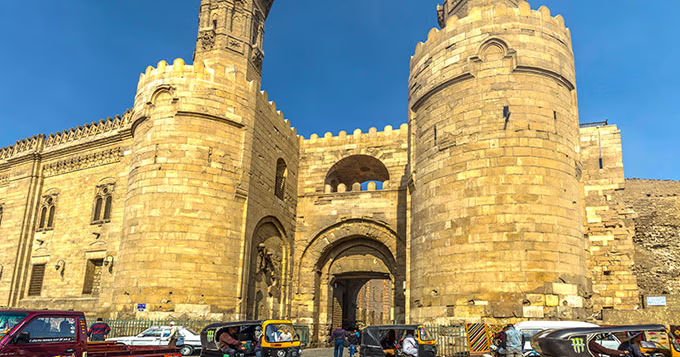
Islamic Cairo was once a walled city, and parts of those old defences still remain. Bab Zuweila is the best-preserved of its medieval gates. Built in the 11th century, it has two minaret towers you can climb—for a small fee and a bit of courage. The steps are steep and narrow, but the view from the top is well worth the effort. From here, you can see how the city sprawls out in all directions, with the domes and minarets of Islamic Cairo punctuating the landscape. Historically, this gate had a more grisly purpose: it was where heads of criminals and defeated enemies were displayed as a warning.
Getting around Cairo

🚇 Metro
The Cairo Metro is one of the quickest ways to get around the city. It’s cheap, air-conditioned, and avoids the traffic. There are three lines covering many important areas. Tickets are affordable, and trains come every few minutes.
Tip: Avoid rush hour (7–9am and 4–6pm) if you can – it gets very crowded.
🚌 Buses and Microbuses
Public buses and smaller microbuses are everywhere, but they can be confusing for visitors. They’re very cheap, but there are no clear maps or stops.
Tip: Unless you speak Arabic or have local help, it’s best to avoid these at first.
🚖 Taxis
Taxis are easy to find, especially black-and-white or white ones with metres. However, some drivers may not want to use the metre. Agree on a price before getting in, or insist on using the metre.
Tip: Use cash and keep small change.
📱 Ride Apps (Uber & Careem)
Uber and Careem are great for visitors. They’re safer, the price is fixed, and there’s no need to speak Arabic. You can pay by card or cash.
Tip: Check both apps to compare prices.
🚶♂️ Walking
Walking is possible in some parts of Cairo, but the city isn’t very pedestrian-friendly. Pavements can be broken or blocked, and traffic is chaotic.
Tip: Be very careful when crossing the road – cars rarely stop!
🚗 Car Hire
You can rent a car, but driving in Cairo is not recommended for visitors. Traffic is heavy, and local driving habits can be very different.
Tip: If you need a car, it’s better to hire one with a driver.
⛴️ River Transport
You can take a boat or a felucca on the Nile for a scenic journey. It’s more for fun than practical transport, but it’s a lovely way to see the city.
Tip: Agree on a price and duration before boarding.
Eating out for vegans in Cairo

🥗 Vegan Food in Cairo, Egypt
While Cairo might not be the most vegan-friendly city in the world, it’s becoming easier to find delicious, high-quality plant-based meals. Here are some of the best places to check out:
🌿 Vegan in Our House – Maadi
A peaceful vegan café tucked away in Maadi, known for its cosy setting and friendly owners. The menu features home-style vegan Egyptian and international dishes, including lentil soup, burgers, and vegan desserts.
📍 Address: 3 Street 198, Degla, Maadi, Cairo
🌐 Website: veganinourhouse.com
🍜 Be Good to You – Zamalek
Located in the heart of Zamalek, this plant-based café focuses on wellness and clean eating. Their bowls, smoothies, and raw desserts are popular among vegans and health-conscious foodies alike.
📍 Address: 11 El-Malek El-Fadl, Zamalek, Cairo
🌐 Instagram: @begoodtoyou.eg
🛒 The Vegan Shop – Online & Delivery
Egypt’s first fully vegan online grocery store, offering plant-based meat, cheese, snacks, and personal care items. Ideal for stocking up your kitchen with cruelty-free products.
🌐 Website: theveganshop.store
🍽️ Khufu’s – Giza Plateau
Located near the Pyramids, Khufu’s is an upscale Egyptian restaurant that offers several vegan-friendly options. While not fully vegan, the kitchen is accommodating, and the view is unbeatable.
📍 Address: Inside the Giza Plateau, near the Pyramids
🌐 Website: khufusrestaurant.com
🧁 Granita – Zamalek
Though not exclusively vegan, Granita offers a few excellent vegan baked goods and great coffee with non-dairy milk options. The garden setting is perfect for a relaxing afternoon.
📍 Address: All Saints’ Cathedral, 5 Michel Lutfallah Street, Zamalek
🌐 Instagram: @granitazamalek
🥙 Zooba – Multiple Branches
A trendy Egyptian street food chain that offers several vegan dishes, including koshary, falafel, and ful (fava beans). Always clearly marked and full of flavour.
📍 Main Branch: 26th of July Street, Zamalek
🌐 Website: zoobaeats.com
🌱 Lychee – Healthy Juices & Snacks
Great for a quick vegan juice or smoothie on the go. Some locations also sell vegan sandwiches and snacks.
📍 Various locations across Cairo
🌐 Website: lycheegroup.com
The best time to visit Cairo
☀️ Best Time to Visit Cairo
Cairo is a city full of history, culture, and sunshine. But choosing the right time to visit can make your trip even better. Here’s when to go:
🌸 Spring (March to May) – Best Overall Time
Spring is one of the best times to visit Cairo. The weather is warm but not too hot, making it ideal for exploring the Pyramids or walking through the markets. There are fewer tourists compared to winter, so it’s a great time for a more relaxed trip.
☀️ Autumn (October to November) – Great Weather
Autumn is another lovely season in Cairo. The heat of summer has passed, and the temperatures are comfortable. You can enjoy sightseeing, river cruises, and outdoor cafés without feeling overheated.
❄️ Winter (December to February) – Cooler and Busier
Winter is the most popular time for tourists. The days are sunny but cooler, especially in the evenings. It’s perfect for people who don’t like hot weather. Just keep in mind that it can be busy and prices may be higher.
🔥 Summer (June to September) – Very Hot
Summer in Cairo is very hot, with temperatures often going above 35°C. It’s the low season for tourism because of the heat. If you don’t mind high temperatures and want cheaper prices, it might still be worth it.
🎒 Tip for Travellers
No matter when you visit, always bring sunglasses, sunscreen, and a hat. The Egyptian sun is strong all year round!
Where to stay in Cairo
🕌 Historic & Cultural: Islamic Cairo
Best for: First-time visitors, history enthusiasts
Why: Home to the Citadel, Sultan Hassan Mosque, Al-Azhar Mosque, Khan El Khalili Bazaar—all within walking distance.
Vibe: Quiet in the evenings, deeply rooted in heritage.
Drawbacks: Can feel a bit touristy, and not much nightlife.
🌊 Scenic & Local: Zamalek
Best for: A balance of local charm and modern comforts
Why: Set on the Nile, full of leafy streets, galleries, and cafes; close to Downtown and the Opera House.
Vibe: Artsy, cultured, walkable.
Drawbacks: Can be pricey and traffic-heavy during peak hours.
🛍️ Trendy & Lively: Downtown Cairo
Best for: Nightlife, cafes, shopping, cultural mix
Why: Bustling with energy, great access to museums, cinemas, and late-night spots.
Vibe: Urban, vibrant, youthful.
Drawbacks: Can be noisy and chaotic, especially around Tahrir Square.
🌳 Chic & Upscale: Heliopolis
Best for: Luxury travellers, upscale shopping
Why: Wide boulevards, elegant architecture, high-end shops and restaurants.
Vibe: Sophisticated, spacious, modern.
Drawbacks: Further from central historic sites—requires a car or ride-hailing.
🛥️ Waterside & Relaxed: Maadi
Best for: A quieter, more residential experience
Why: Riverside promenades, international eateries, and a relaxed atmosphere popular with expats.
Vibe: Leafy, peaceful, community-driven.
Drawbacks: Longer commute to central attractions, but worth it for the calm.
1. Mid Range: Comfort Sphinx&Pyramids Inn
Comfort Sphinx & Pyramids Inn is a cosy and welcoming guesthouse located just a short walk from the Giza Plateau, offering stunning views of the Great Pyramids and the Sphinx right from its rooftop terrace. It’s a popular choice for travellers looking for a more personal, homely alternative to large hotels while still being close to Cairo’s most iconic landmarks. The rooms are clean and comfortable, with air conditioning, private bathrooms, and essential amenities to make your stay pleasant. The staff are known for their friendliness and hospitality, often going out of their way to help guests arrange tours, transport, or local dining experiences. Breakfast is typically included and served on the rooftop, where you can enjoy your meal with the pyramids in the background—a truly unforgettable setting. While the inn itself is modest and not luxurious, it offers excellent value for money, especially for those who want an authentic and convenient base for exploring the wonders of ancient Egypt


2. Luxury – The St. Regis Cairo
The St. Regis Cairo is one of the most luxurious and prestigious hotels in the city, offering an exceptional blend of timeless elegance and modern sophistication. Located on the banks of the River Nile, the hotel enjoys a prime position in the heart of Cairo, with easy access to key landmarks such as Tahrir Square, the Egyptian Museum, and the lively Zamalek district. Designed by renowned architect Michael Graves, its striking architecture and lavish interiors make a strong impression from the moment you arrive. The hotel features a range of opulent rooms and suites, many with stunning Nile views, all equipped with top-tier amenities and the signature St. Regis Butler Service. Guests can enjoy world-class dining across several restaurants offering everything from refined Egyptian cuisine to international favourites. The Iridium Spa provides a serene escape with indulgent treatments, while the indoor and outdoor pools, fitness centre, and elegant lounges cater to both relaxation and recreation.

3. Budget – Solima Pyramids View
Solima Pyramids View is a popular spot located near the Giza Plateau, offering stunning, up-close views of the iconic Pyramids of Giza, including the Great Pyramid, the Pyramid of Khafre, and the Pyramid of Menkaure. Many visitors choose this location for its unbeatable perspective of the ancient monuments, especially at sunrise or sunset when the lighting casts a golden hue over the desert landscape. The area around Solima Pyramids View is home to a mix of cafés, rooftop terraces, and guesthouses, where you can relax with traditional Egyptian tea or a meal while admiring the view. It’s particularly well-loved by travellers who want a more immersive, local experience compared to staying in central Cairo. The atmosphere is laid-back, and the streets nearby have a charming, slightly rustic feel, giving a sense of being close to everyday life in Giza.

Related
More to Explore

Visiting Karnak Temple offers a remarkable glimpse into ancient Egyptian civilisation, where towering columns, intricate carvings, and vast courtyards reveal the enduring skill and devotion that shaped one of the most impressive religious sites in the world.

Luxor Temple is a large and beautiful ancient temple in the middle of Luxor city, built thousands of years ago to honour the gods, where you can walk among tall stone columns, see detailed carvings, and learn about the rich history of ancient Egypt in a place that still feels full of wonder today.