skip to Main Content

Norway: Oslo – Ibsen House Museum

We’d already visited the museum of one of Norway’s iconic figures Munch, but we were not off to see the former apartment of another, Norwegian playwright, Henrik Ibsen. We arrived at the Ibsen Museum and booked a tour of the apartment, which is the only way of seeing it. While we were waiting for the tour to start, we were guided to a couple of rooms upstairs where there were display panels and audio guides about Ibsen’s most famous works. He was one of the most influential playwrights of his time. His major works include Brand, Peer Gynt, An Enemy of the People, Emperor and Galilean, A Doll’s House, Hedda Gabler, Ghosts, The Wild Duck, When We Dead Awaken, Rosmersholm, and The Master Builder. Ibsen is the most frequently performed dramatist in the world after Shakespeare and in 2006 Ibsen’s ‘A Doll’s House’ was the most-performed play worldwide.

Ibsen’s early poetic and cinematic play Peer Gynt has strong surreal elements. After Peer Gynt Ibsen abandoned verse and began to write in realistic prose. Several of his later dramas were considered scandalous to many of his era when European theatre was expected to model strict morals of family life and propriety. He completely rewrote the rules of drama with a realism that we still see in theatres today. He turned the European stage away from what it had become – a plaything and distraction for the bored – and introduced a new order of moral analysis.

It was helpful to have the grounding of Ibsen’s work and the context of his plays before heading on the tour of his apartment. The introduction for the tour started in the brand-new theatre that was built to host Ibsen plays. Sadly, our guide explained that they did not have the funding to put any productions on at that time.

The Ibsen apartment is small, with a dining room, a salon, a study (which was the largest room), and two bedrooms – one large one for his wife, Suzannah, and a smaller one for Ibsen. There was also a small kitchen and quarters for a maid. Suzannah was a force of nature and ensured Ibsen kept on track with his writing. His only escape was a lunchtime visit to the café down the road. As always visiting these places can be unremarkable, but we always get a kick out of visiting a site where history was made and pay homage to a hero of ours. Not that Ibsen is high on our all-time favourites, but he did have an important impact on playwriting.

The group we were touring with was not too large which was great as the apartment was not large but as usual there were a couple of annoying people among them. We’d worked out on our previous tours to hang at the back so that when the rest of the group had left the room, we could get some good photos of empty rooms.

Planning your visit to the Ibsen Museum

Getting around Oslo

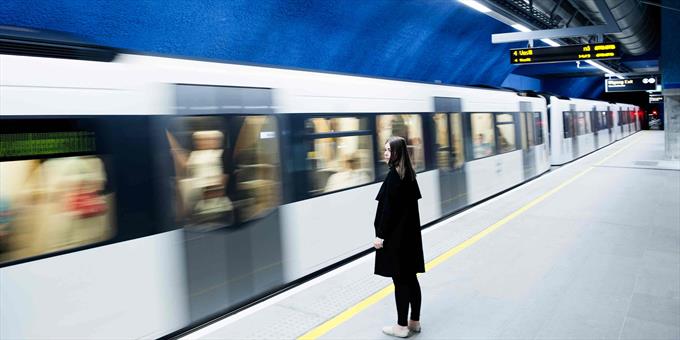
Thanks to Oslo’s excellent public transportation system Ruter, it is easy to travel around the city. Distances between attractions are often quite short, so you can explore a lot of the city by walking or biking.

Public transport

All public transport in Oslo and the surrounding boroughs are included in one ticketing system. That includes city and regional buses, trams, undergrounds, local trains and ferries. The ferries to Bygdøy are not included.

Tickets and zones

One of the easiest ways to get and manage tickets for public transport is using the mobile app Ruter. If you prefer having physical tickets in your pocket, you can purchase them at the Oslo Visitor Centre, at Ruter’s customer service centre, and in Narvesen and 7-Eleven shops.
Get an overview of the prices for tickets here.

Please note that if you want a physical version of weekly, monthly or annual tickets, you need a reusable plastic travel pass costing 50 NOK. All tickets are transferable.

Oslo and the surrounding boroughs are divided into several zones. All of Oslo, including the last stops of the subway system, is included in zone 1. If you want to go to Oslo Airport Gardermoen, you need a ticket for four zones. If you have a period ticket of the Oslo Pass, you can buy the remaining zones separately.
Ticket prices for public transportation in Oslo

See all ticket prices for public transport in Oslo and find out where you can buy tickets.

pass

Oslo Pass

If you are planning to spend a few days in Oslo, using the public transport system and visiting several of the city’s attractions then the Oslo Pass could be a good option for you. We purchased the pass for our stay and it was great value for money and made our lives easier. Find out more about the Oslo Pass and what is included here.

With the Oslo Pass, you can travel for free within zone 1 (Oslo) and zone 2. In addition to Ruter’s public transport network, also the ferries to Bygdøy are included in the Oslo Pass. 

It comes as an app as well, so you can handily have it on your phone when using the transportation or visiting one of the tourist attractions.

Eating out for vegans in Oslo

While Oslo might not be the most vegan-friendly city in the world, there are still plenty of high-quality options to choose from.

The best time to visit Oslo

Positioned in the southern part of Norway, Oslo experiences a Humid continental climate; no dry season, warm summer, according to the Köppen climate classification, symbol Dfb. The climate bears a strong influence of Gulf Stream, thus enjoying a warmer climate than other regions of similar latitude around the world.

For Oslo annually, monthly average temperatures range between -6.8°C (19.8°F) to 21.5°C (70.7°F), showing significant fluctuations as the season change. Moreover, rainfall is experienced all year round, with monthly averages ranging from 36mm (1.42″) to 90mm (3.54″). The city endures between 4 and 8 rainy days per month, with the maximum number of rainy days in August and November.

The best time to visit Oslo

For visitors, the best time to visit Oslo is usually between June and August. Temperatures during these months range from 15.1°C (59.2°F) to 21.5°C (70.7°F), which is quite pleasant for outdoor activities. The sea temperature is at its highest, around 17.3°C (63.1°F) in June and 17.9°C (64.2°F) in August. These months also provide the longest daylight hours, between 17.9 and 18.7 hours, providing ample opportunity to explore the city’s attractions.

The worst time to visit Oslo
The winter season, from December to February, is regarded as the least attractive time to visit Oslo due to the cold temperatures and short daylight hours. The average temperatures plummet to cold levels between -6.8°C (19.8°F) to -0.9°C (30.4°F), and daylight is restricted to between 6.1 and 9.2 hours. Additionally, the sea temperature is at its coldest, dipping to between 3°C (37.4°F) to 4.2°C (39.6°F), making it unsuitable for water-based activities.

Where to stay in Oslo

1.  Mid Range: Hotell Bondeheimen

This central hotel is just 100 metres from the National Gallery and Oslo’s main shopping street, Karl Johans Gate. Free WiFi and a popular in-house restaurant is available. The Oslo Opera House is 1.3 km away.

Hotel Bondeheimen’s spacious rooms also include cable TV, a tea/coffee maker and ironing facilities.

Hotel Bondeheimen’s restaurant, Kaffistova, specialises in traditional Norwegian food such as potato dumplings and cod.

Tinghuset Tram Stop is just around the corner from Bondeheimen and is a 4-minute ride from Oslo Central Station.

2. Luxury – Hotel Continental

The elegant Hotel Continental is centrally located in Oslo, only 150 metres from Oslo’s main street, Karl Johan. It is the only 5-star hotel in Norway, and offers free in-room Internet access.

The individually decorated rooms at Continental Hotel include a cable TV, minibar and an in-room safe. Bathrooms include amenities and a separate shower and bath.

Leisure options include a free 24 hour gym and a lobby lounge featuring Edward Munch lithographs.

Guests can enjoy fine dining at Restaurant Eik Annen Etage. The historic Theatercaféen has been the Oslo’s most popular dining and meeting place for over 100 years.

3. Budget -Bunks at Rode

Situated in Oslo, Bunks at Rode has a shared lounge, terrace, bar, and free WiFi throughout the property. The property is around 4.1 km from Akershus Fortress, 6.9 km from Sognsvann Lake and 2.4 km from Oslo Bus Terminal. The property is non-smoking and is located 2.5 km from Oslo Central Station.

Certain rooms are fitted with a kitchenette with a fridge, a microwave and a stovetop. The rooms have bed linen.

Sign up to receive updates

We keep your data private and share your data only with third parties that make this service possible. See our Privacy Policy for more information.

Back To Top
Search

Discover more from Hoblets On The Go

Subscribe now to keep reading and get access to the full archive.

Continue reading