The Fram Museum contains exhibitions of some of the most famous voyages of exploration. The centerpiece of the museum is the world´s strongest wooden ship, the polar ship Fram.
Norway: Oslo – The Norwegian Center for Holocaust
When planning our trip to Bygdøy Karen had noticed that there was a Holocaust Centre in the area, so after finishing up at the Maritime Museum we took the bus to the stop close by there. The centre is officially known as ‘The Norwegian Center for Holocaust and Minority Studies’ and is a research institute as well as having some exhibitions open to the public. The Centre is located in a former Norwegian Nazi building, Villa Grande, and not only focuses on the Holocaust but also other genocides, extremism, antisemitism, hate speech, and the situation of minorities in contemporary societies.
As you approach the building you cannot fail to notice the art installation on its façade. Entitled “Innocent Questions”, the installation artist Arnold Dreyblatt has used an oversized punch card, focusing both on the Holocaust and current questions, to raise awareness of the violation of personal rights.
We started with visiting the Holocaust exhibit, which is made up of display panels, some film, and memorabilia. All the panels are only in Norwegian, but you can get an audio guide, which is helpful but only covers a fraction of what is depicted on the display, which was a little frustrating.
The German occupation of Norway began on 9 April 1940. In 1942, there were at least 2,173 Jews in Norway. At least 775 of them were arrested, detained and/or deported. More than half of the Norwegians who died in camps in Germany were Jews. 742 Jews were murdered in the camps and 23 Jews died as a result of extrajudicial execution, murder and suicide during the war, bringing the total of Jewish Norwegian dead to at least 765, comprising 230 complete households.
Many Jews survived by fleeing Norway, nearly two-thirds escaping. Of these, around 900 Jews were smuggled out of the country by the Norwegian resistance movement, mostly to Sweden but some also to the United Kingdom. Between 28 and 34 of those deported survived their continued imprisonment in camps (following their deportation) and around 25 (of these) returned to Norway after the war.
However, many times we visit museums and monuments dedicated to the Holocaust the shock and horror are always palpable.
Before leaving the Holocaust exhibit, we took a quick visit to the bunker under Villa Grande, which was built in 1942, when Vidkun Quisling and his wife Maria moved into the villa. The bunker was built especially for Quisling who was a Norwegian military officer, politician and Nazi collaborator who nominally headed the government of Norway during the country’s occupation by Nazi Germany during World War II. Quisling was put on trial during the legal purge in Norway after World War II. He was found guilty of charges including embezzlement, murder, and high treason against the Norwegian state, and was sentenced to death. He was executed by firing squad at Akershus Fortress, Oslo, on 24 October 1945.
As we were leaving the Centre, Karen gave some feedback to the young ladies at the reception about the lack of detail on the audio guide. They asked whether we’d been to see their new exhibit called ‘In/ Visible – Everyday Racism in Norway’ – which we hadn’t. So, off we went. This is not a large exhibit, but it was fascinating. The first section was a large video wall that projected interviews with people, most younger folks, who had experienced prejudice and abuse due to their race, sexuality or disability. We listened to their stories, and it is sad to think how global such prejudice is, even in developed countries where there remain overt and subtle examples of racism. It was interesting to hear from Sami people, an indigenous minority group who mostly live in northern Norway as to how they are treated by fellow Norwegians. One of the most interesting exhibits was a timeline that followed Norwegian and World History alongside legislation and worldwide events associated with racism and discrimination. Very sad.!
Planning your visit to the Norwegian Center for Holocaust and Minority Studies
Bus:
- Line 30: Nydalen-Jernbanetorget-Bygdøynes. Departures every 10 minutes.
Ferry:
- March 22 – October 6: The Bygdøy Ferry departs from Rådhusplassen (Rådhusbrygge 3). The journey takes 10 minutes.
Bike or On Foot:
- Pedestrian and bicycle path from the city center (along the waterfront) via Frongnerkilen, Kongsgården to Bygdøynes.
- City bikes are available at Bygdøynes (during the summer season).
- Bike parking available on site.
Car:
- From E18 or Bygdøy Allé, take the exit to Bygdøy.
- Private parking (APCOA), HC parking.
- Street parking in the area. HC parking and bus parking between Fram and Gjøabygget.
[ninja_tables id=”116352″]
Getting around Oslo
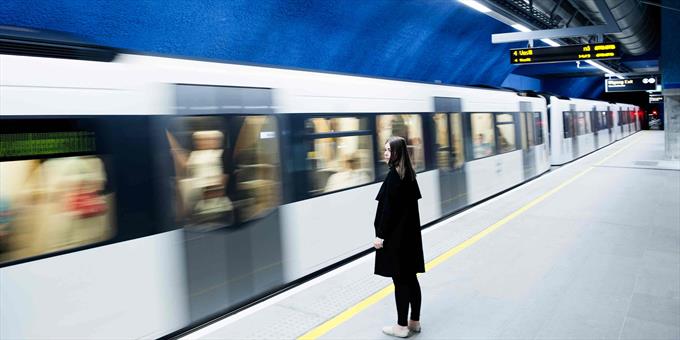
Thanks to Oslo’s excellent public transportation system Ruter, it is easy to travel around the city. Distances between attractions are often quite short, so you can explore a lot of the city by walking or biking.
Public transport
All public transport in Oslo and the surrounding boroughs are included in one ticketing system. That includes city and regional buses, trams, undergrounds, local trains and ferries. The ferries to Bygdøy are not included.
Tickets and zones
One of the easiest ways to get and manage tickets for public transport is using the mobile app Ruter. If you prefer having physical tickets in your pocket, you can purchase them at the Oslo Visitor Centre, at Ruter’s customer service centre, and in Narvesen and 7-Eleven shops.
Get an overview of the prices for tickets here.
Please note that if you want a physical version of weekly, monthly or annual tickets, you need a reusable plastic travel pass costing 50 NOK. All tickets are transferable.
Oslo and the surrounding boroughs are divided into several zones. All of Oslo, including the last stops of the subway system, is included in zone 1. If you want to go to Oslo Airport Gardermoen, you need a ticket for four zones. If you have a period ticket of the Oslo Pass, you can buy the remaining zones separately.
Ticket prices for public transportation in Oslo
See all ticket prices for public transport in Oslo and find out where you can buy tickets.
Oslo Pass
If you are planning to spend a few days in Oslo, using the public transport system and visiting several of the city’s attractions then the Oslo Pass could be a good option for you. We purchased the pass for our stay and it was great value for money and made our lives easier. Find out more about the Oslo Pass and what is included here.
With the Oslo Pass, you can travel for free within zone 1 (Oslo) and zone 2. In addition to Ruter’s public transport network, also the ferries to Bygdøy are included in the Oslo Pass.
It comes as an app as well, so you can handily have it on your phone when using the transportation or visiting one of the tourist attractions.
Eating out for vegans in Oslo
While Oslo might not be the most vegan-friendly city in the world, there are still plenty of high-quality options to choose from.
- Oslo Raw – Address: Skovveien 16, 0257 Oslo, Norway osloraw.no
- Dirty Vegan at Barcode Street Food – Dronning Eufemias gate 14, 0191 Oslo, Norway https://www.dirtyvegan.no
- Nord Vegan – Kristian IVs gate 15B, 0164 Oslo, Norway 3 https://www.nordvegan.no/
- Cultivate – Helgesens gate 18a, 0553 Oslo, Norway – https://cultivatefood.no
- Torggata Botaniske – Torggata 17B, 0183 Oslo, Norway https://www.torggatabotaniske.no/
- Veggie da Luca – Thorvald Meyers gate 34, 0555 Oslo, Norway https://delideluca.no/
- Silk Road at Oslo Street Food – Torggata 16, 0181 Oslo, Norway – https://www.oslo-streetfood.no/silk-road
The best time to visit Oslo
Positioned in the southern part of Norway, Oslo experiences a Humid continental climate; no dry season, warm summer, according to the Köppen climate classification, symbol Dfb. The climate bears a strong influence of Gulf Stream, thus enjoying a warmer climate than other regions of similar latitude around the world.
For Oslo annually, monthly average temperatures range between -6.8°C (19.8°F) to 21.5°C (70.7°F), showing significant fluctuations as the season change. Moreover, rainfall is experienced all year round, with monthly averages ranging from 36mm (1.42″) to 90mm (3.54″). The city endures between 4 and 8 rainy days per month, with the maximum number of rainy days in August and November.
The best time to visit Oslo
For visitors, the best time to visit Oslo is usually between June and August. Temperatures during these months range from 15.1°C (59.2°F) to 21.5°C (70.7°F), which is quite pleasant for outdoor activities. The sea temperature is at its highest, around 17.3°C (63.1°F) in June and 17.9°C (64.2°F) in August. These months also provide the longest daylight hours, between 17.9 and 18.7 hours, providing ample opportunity to explore the city’s attractions.
The worst time to visit Oslo
The winter season, from December to February, is regarded as the least attractive time to visit Oslo due to the cold temperatures and short daylight hours. The average temperatures plummet to cold levels between -6.8°C (19.8°F) to -0.9°C (30.4°F), and daylight is restricted to between 6.1 and 9.2 hours. Additionally, the sea temperature is at its coldest, dipping to between 3°C (37.4°F) to 4.2°C (39.6°F), making it unsuitable for water-based activities.
Where to stay in Oslo
1. Mid Range: Hotell Bondeheimen
This central hotel is just 100 metres from the National Gallery and Oslo’s main shopping street, Karl Johans Gate. Free WiFi and a popular in-house restaurant is available. The Oslo Opera House is 1.3 km away.
Hotel Bondeheimen’s spacious rooms also include cable TV, a tea/coffee maker and ironing facilities.
Hotel Bondeheimen’s restaurant, Kaffistova, specialises in traditional Norwegian food such as potato dumplings and cod.
Tinghuset Tram Stop is just around the corner from Bondeheimen and is a 4-minute ride from Oslo Central Station.
2. Luxury – Hotel Continental
The elegant Hotel Continental is centrally located in Oslo, only 150 metres from Oslo’s main street, Karl Johan. It is the only 5-star hotel in Norway, and offers free in-room Internet access.
The individually decorated rooms at Continental Hotel include a cable TV, minibar and an in-room safe. Bathrooms include amenities and a separate shower and bath.
Leisure options include a free 24 hour gym and a lobby lounge featuring Edward Munch lithographs.
Guests can enjoy fine dining at Restaurant Eik Annen Etage. The historic Theatercaféen has been the Oslo’s most popular dining and meeting place for over 100 years.
3. Budget -Bunks at Rode
Situated in Oslo, Bunks at Rode has a shared lounge, terrace, bar, and free WiFi throughout the property. The property is around 4.1 km from Akershus Fortress, 6.9 km from Sognsvann Lake and 2.4 km from Oslo Bus Terminal. The property is non-smoking and is located 2.5 km from Oslo Central Station.
Certain rooms are fitted with a kitchenette with a fridge, a microwave and a stovetop. The rooms have bed linen.
